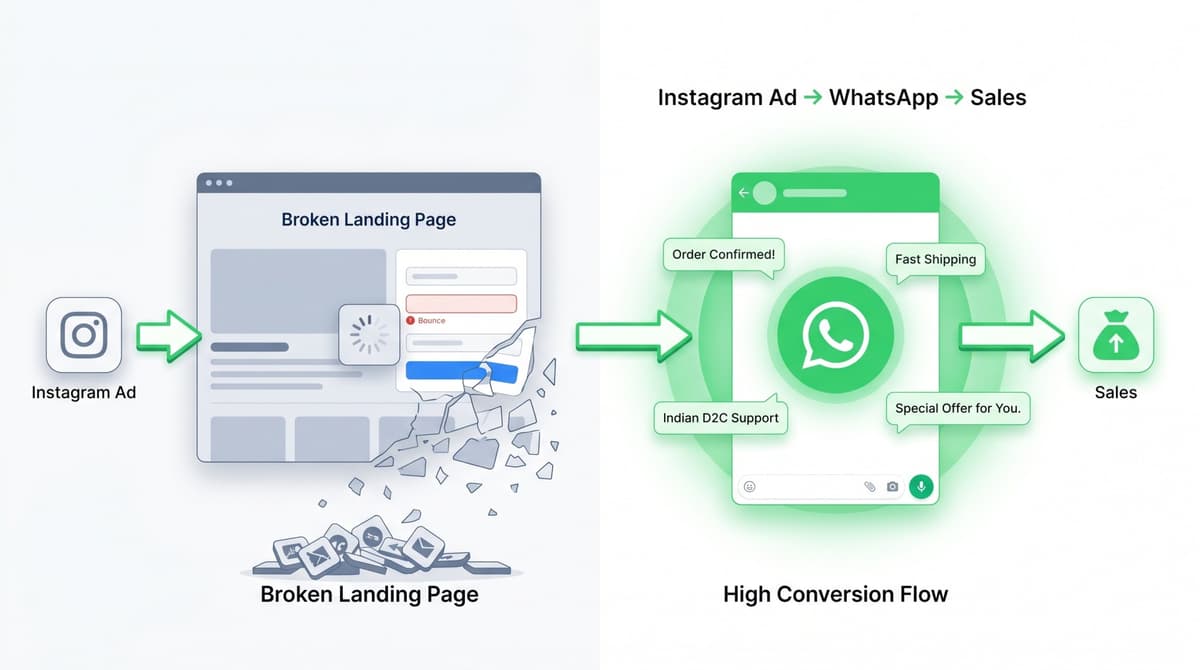
Click Whatsapp Ads helps Indian teams connect the reader problem, workflow owner, source-backed context, and next action. It gives operators a simple way to reduce manual work, improve handoffs, and decide what to fix first without turning the article into a sales pitch.
Click Whatsapp Ads matters because growing teams often lose time when ownership, tools, and follow-up steps are unclear. This guide helps founders, marketers, sales leads, and operations teams solve that gap with a practical framework. It explains why the topic matters, how to judge readiness, what to improve first, and where OG Marka can support implementation.
Why this matters now
Click Whatsapp Ads is no longer only a technology topic. It affects how quickly a team can answer customers, qualify demand, hand work to the right owner, and learn from results. A useful article should therefore give readers more than a trend summary. It should help them choose what to inspect, what to simplify, and what to measure before they spend money.
OG Marka treats Click Whatsapp Ads as an operating system decision. The practical question is not whether the topic sounds modern. The question is whether it improves the daily path from customer signal to team action. For background, readers can compare this article with Shopify official commerce blog and Meta business resources for WhatsApp.
- Click Whatsapp Ads
- Click Whatsapp Ads means the specific workflow, decision, or platform choice that helps a team move from scattered activity to a clearer operating rhythm with named owners and measurable outcomes.
Operating framework
The OG Marka framework starts with context, then moves to ownership, workflow, evidence, and action. Context explains who the article is for. Ownership names the person or team responsible for the change. Workflow shows the steps that need to happen in the real business. Evidence keeps the recommendation grounded. Action turns the reading into a useful next step.
This structure helps Click Whatsapp Ads stay practical. For example, a founder can use it to brief a team, a sales lead can use it to clean up follow-up, and an operator can use it to decide whether the next change belongs in process, content, automation, or reporting. That is why the article links to relevant OG Marka services and a consultation path instead of ending with generic advice.
How should teams start?
Teams should start with a small audit before changing tools. The audit should list current channels, owners, response points, proof sources, and customer outcomes. This prevents a common mistake: adding software when the real issue is unclear ownership or weak handoff design. A simple audit also makes the first improvement easier to explain to leadership.
- Step 1: define the customer problem and the team that owns it.
- Step 2: map the current workflow from first signal to final follow-up.
- Step 3: choose one improvement that can be measured within the next review cycle.
- Step 4: document the decision, assign an owner, and review the result before expanding.
OG Marka recommends keeping the first pass narrow. A narrow pass builds trust because the team can see what changed, why it changed, and whether the result helped. Broad transformation work becomes easier after this first proof point.
Measurement and proof
Good measurement for Click Whatsapp Ads should be simple enough for the team to use every week. The first metrics should describe speed, coverage, quality, and revenue movement. Speed shows whether customers wait less. Coverage shows whether work stops falling through gaps. Quality shows whether the answer or handoff improved. Revenue movement shows whether the change matters commercially.
| Review area | What to check | Useful outcome |
|---|---|---|
| Ownership | Named owner for each step | Less confusion during handoff |
| Workflow | Clear path from signal to action | Fewer manual delays |
| Evidence | Sources, examples, or customer data | More defensible decisions |
| Next step | One action assigned after review | Better follow-through |
For additional context, readers can review Google Search Central SEO starter guide. The article avoids unsupported promises and uses the sources as reference points, not as proof of certain results. That keeps the recommendation useful without overstating certainty.
Next step
The right next step is to run a focused review of Click Whatsapp Ads against the current customer journey. Identify the point where work slows down, customers lose context, or reporting stops being useful. Then choose one workflow improvement and assign a review date. This gives the team a clean implementation path instead of a vague idea.
Keep the first fix small: name one owner, pick one task, and set one due date. Review the result each week and share what changed with the team. This simple rhythm helps people learn fast and keeps the work tied to real customer needs.
Use the review as a live work note: write down the old step, the new step, and the reason for the change. Ask the team what became easier, what still feels slow, and which part should stay. This keeps Click Whatsapp Ads tied to daily work, not to a one-time content update.
If the review shows that the process needs deeper support, OG Marka can help with an audit, workflow design, CRM or ERP setup, WhatsApp commerce planning, and content systems. Start with a short consultation or explore the most relevant service page for this topic.