Skip to content
Digital Growth

SEO in 2026: The Indian Small Business Owner's No-Fluff Guide to Page 1

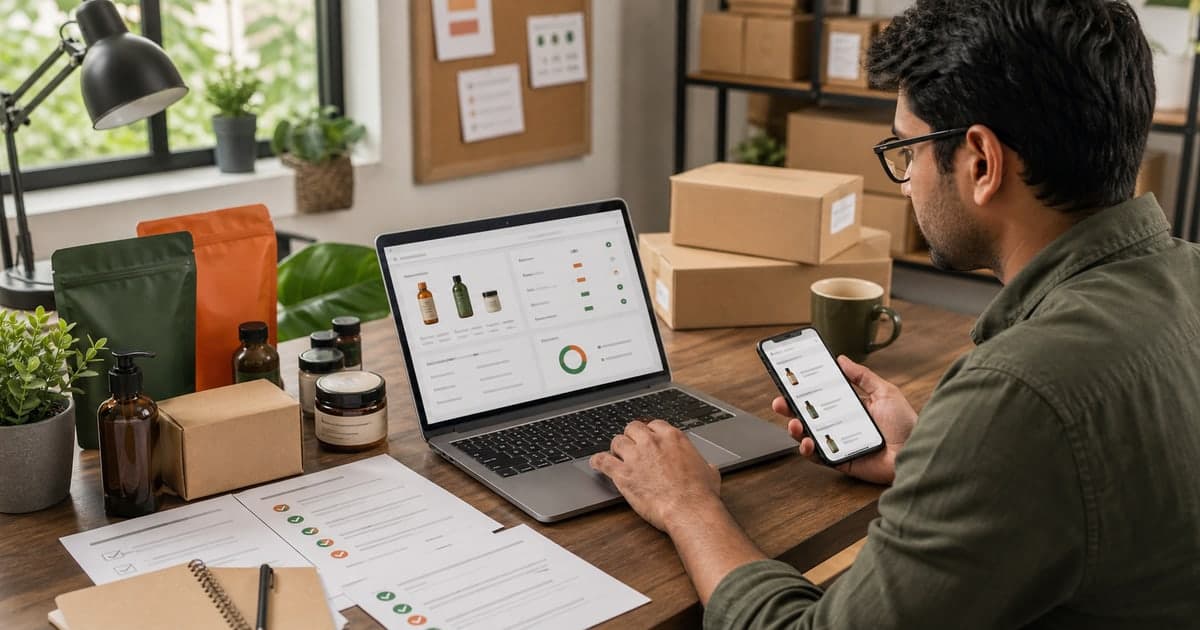
Featured image for SEO in 2026: The Indian Small Business Owner's No-Fluff Guide to Page 1

Quick Answer

SEO in 2026 rewards depth, mobile experience, and user intent. For Indian SMBs, local SEO and consistent content creation compound faster than paid ads.

By the Numbers

Research signals worth checking before you commit budget

Treat these as planning inputs, not guaranteed outcomes. Validate them against your own funnel, service mix, and margins.

75% of Indian internet users are mobile-only

Mobile-first imperative

Source: Statista India 2025

Google updates its algorithm 500-600 times per year

Ongoing SEO importance

Source: Google Search Central

Local SEO drives 40-60% lower CPA than paid ads within 6-9 months

SEO ROI

Source: Industry benchmark

98% open rate for WhatsApp vs 20% for email marketing

Channel comparison

Source: Meta Business

Sources & Methodology

Use these links to verify the market claims in this guide

Preference is given to official surveys, primary reports, and vendor methodology pages over unsourced roundup statistics.

Primary source

Google Search Central - SEO Starter Guide

Open source
Primary source

Statista - Internet Users in India 2026

Open source
Primary source

Moz - Local SEO Guide

Open source

SEO in 2026: Why Indian SMBs Can't Ignore Organic Search Anymore

Google processes 8.5 billion searches daily (Statista, 2025). For Indian SMBs, that's not just noise — it's your customer acquisition channel if you're ranking. Yet 67% of Indian small businesses have no SEO strategy whatsoever.

Here's the uncomfortable truth: paying for ads is expensive. Google Ads costs Indian businesses an average of ₹50-200 per click depending on your industry. SEO costs upfront (time or money to implement), but compounds. A blog post from 2024 still drives traffic in 2026. An ad stops the moment you stop paying.

This guide cuts through the noise. No keyword stuffing. No "wait 6 months for results" nonsense. Just the SEO tactics that actually move the needle for Indian businesses in 2026.

The SEO Landscape in 2026: What Changed (And What Didn't)

Core Web Vitals are now table stakes. Google stopped treating page speed as a tiebreaker — it's now a primary ranking signal. If your website takes 4 seconds to load on a 4G connection (the median connection speed in India), you're already losing to competitors.

Mobile-first indexing? That's old news. Mobile is the only index now. Google crawls, ranks, and serves results based on your mobile version. If your site doesn't work on phones, it doesn't work in Google.

E-E-A-T matters more than ever. Google's 2024 update doubled down on Experience, Expertise, Authoritativeness, and Trustworthiness. For Indian B2B companies, this means author bios, client testimonials, case studies with results, and credentials matter. A blog post without context about who wrote it ranks worse.

AI-generated content isn't a shortcut. Google's March 2024 core update specifically targeted low-value AI spam. But using AI to scale your research, outline, and editing? Totally fine. The difference: AI as a thinking partner beats AI as a replacement for thinking.

On-Page SEO: The Foundation That Still Works

Title tags and meta descriptions aren't flashy, but they're your store window. 45% of clicks go to the top 3 search results (Advanced Web Ranking, 2024). Your title tag and meta description determine whether someone clicks your link or your competitor's.

Your title tag should:

  • Be 50-60 characters (so it doesn't get cut off in mobile search results)
  • Lead with your primary keyword (words at the start rank better)
  • Include your business value, not just keywords ("CRM for Restaurants in Delhi" beats "Best CRM")
  • Pass the "would I click this?" test — because if you wouldn't, neither will your customers

Meta descriptions don't directly affect rankings, but they affect click-through rates. A compelling meta description that speaks to the user's problem gets more clicks than a generic keyword repetition. More clicks = better CTR signal to Google = better rankings over time.

Your H1 tag should match (or closely align with) your title tag and your primary keyword. But don't keyword stuff. Write naturally. "The Complete Guide to Restaurant CRM in 2026" works. "Best Restaurant CRM software for Indian restaurants that increases orders" doesn't.

Content Strategy That Actually Ranks

The content playbook hasn't changed: create something 10x better than competitors. But "better" in 2026 means specific things.

Depth wins. Mediocre 500-word posts don't rank anymore (unless you're in a niche with almost no competition). The average top-ranking article is 1,890 words (Semrush, 2024). This doesn't mean pad with fluff — it means cover the topic thoroughly. If you're writing about "restaurant billing software," mention GST compliance, integration with POS systems, and offline functionality. Competitors who mention these rank higher because they answer more user questions in one place.

Target search intent, not just keywords. Someone searching "how to increase restaurant sales" wants tactics, not product pitches. Someone searching "best restaurant billing software" wants a comparison or recommendation. Write for intent, not keywords. Google rewards this.

Use data and case studies. "We helped a Delhi restaurant increase orders by 40% in 3 months using SMS marketing" is infinitely more compelling than "SMS marketing increases sales." Specific results from real businesses (with permission) build authority and answer user questions directly. If you can't share client results, share your own.

Update old content religiously. A blog post from 2023 that ranks well for your business probably has years of life left — but only if you update it. Add new data, refresh case studies, remove outdated tools or tactics, and update publication dates. Google favors fresh content, and updated posts often see ranking jumps within weeks.

Technical SEO: The Unsexy Stuff That Kills Rankings

Technical SEO doesn't generate buzz, but it's the difference between ranking #3 and #10.

Site speed matters tremendously for India. The median 4G connection speed is 10 Mbps. If your website takes 5+ seconds to load, you're losing traffic. Tools like Google PageSpeed Insights show exactly what's slow. Usually it's images (use WebP format and compress), unoptimized JavaScript, or excessive tracking code. Fix these and you'll see ranking improvements within weeks.

Mobile responsiveness is non-negotiable. Test your site on actual phones (not just Chrome DevTools). Does your navigation work? Can users read your text without zooming? Do your CTAs work on mobile? If the answer to any is "no," fix it before worrying about anything else.

Internal linking is your control panel. Strategic internal links distribute authority, help Google understand your site structure, and guide users to related content. Link from high-traffic pages to pages you want to rank higher. Use descriptive anchor text ("learn about CRM for hospitality" beats "click here"). Aim for 3-5 internal links per post — enough to be useful, not so many it feels spammy.

XML sitemaps and robots.txt matter. A basic sitemap helps Google crawl your site efficiently. Keep it updated when you publish new content. robots.txt should allow Google to crawl important pages and block the pages you don't want indexed (like admin panels or duplicate content). Most platforms handle this automatically — just verify it's working.

HTTPS is mandatory. Google ranks HTTPS sites higher than HTTP. If you're not on HTTPS in 2026, you're handicapping yourself. Most hosts provide free SSL certificates (Let's Encrypt). Set it up.

Local SEO for Indian Businesses (Your Biggest Opportunity)

If you serve customers in specific cities or regions, local SEO is your shortcut to high rankings.

Google My Business is free real estate. Claim and optimize your GMB profile. Upload recent photos, add business hours, respond to reviews, and post regularly. Businesses with regular GMB posts see 70% more customer inquiries (Google, 2023). It takes 10 minutes per week and pays dividends.

Local keywords are easier to rank for. "Best restaurant in Delhi" is competitive. "Best restaurant in Hauz Khas, Delhi" might be achievable in 2-3 months. Location-specific keywords have lower competition and higher intent — someone searching for a restaurant in their neighborhood is more likely to visit than someone doing broad research.

Reviews are a ranking factor (and a trust signal). Businesses with more recent reviews rank higher in local search results. Encourage customers to leave honest reviews on Google. Respond to reviews (especially negative ones) within 24 hours. This signals to Google (and potential customers) that you care about feedback.

Citations matter more than you think. A citation is any mention of your business name, address, and phone number online (even without a link). Directories like Justdial, Sulekha, and Indiamart are important. Ensure your NAP (name, address, phone) is consistent across all directories. Inconsistencies confuse Google and hurt your rankings.

Backlinks are Google's "votes of confidence." More votes = higher rankings. But you don't earn them by asking strangers for links.

Create link-worthy content. Original research, comprehensive guides, case studies, and tools get linked naturally. A Supabase query showing "how to export sales data" might get linked by marketing blogs. A client success story in your industry might get picked up by relevant publications. Create content that's so useful people want to reference it.

Build relationships with complementary businesses. If you're a restaurant billing software, talk to POS manufacturers, cloud kitchen operators, and restaurant consultants. Guest posting, interviews, and collaborations are natural places for backlinks that actually make sense.

Leverage brand mentions. Tools like Google Alerts or Mention.com notify you when your business is mentioned online. If someone mentions you without linking, politely ask if they can add a link. Most bloggers will, especially for established brands.

HARO (Help A Reporter Out) is underrated for Indian businesses. Journalists post questions for expert quotes. If you answer well, you get a backlink from major publications. Sign up, respond to relevant queries in your industry, and let quality publications link to you naturally.

Bad backlinks hurt more than no backlinks. If you're tempted to buy links from link networks or use black-hat tactics, don't. Google's link spam algorithms are sophisticated. Bad links can result in manual penalties that tank your rankings for months. Play the long game.

Measuring SEO Success (Stop Obsessing Over Rankings)

Ranking for a keyword matters only if it drives traffic and conversions. Yet most businesses track rankings and ignore traffic and revenue.

The metrics that matter:

  • Organic traffic: Total visitors from organic search (Google Analytics). Set a baseline and track growth month-over-month. A 20% growth in organic traffic is a win.
  • Click-through rate (CTR): Percentage of people who see your site in search results and click it. Low CTR (below 2-3%) means your title/description needs work. High CTR (above 5%) means your messaging is resonating.
  • Conversion rate: What percentage of organic visitors become customers? This varies by business, but track it. If you're getting 1,000 organic visitors but zero conversions, it's not an SEO problem — it's a website problem.
  • Keyword rankings: Track 10-15 primary keywords (not 100). Monitor monthly. Upward trends mean your SEO is working. Downward trends mean competitors are doing something better — investigate why.

Setup in Google Analytics 4 takes 30 minutes and changes everything. Link your GA4 to Google Search Console. Set up conversion tracking for your main business objectives (form submissions, calls, purchases). Now you can see which keywords bring your best customers, not just most visitors.

Your 90-Day SEO Action Plan

You don't need to do everything at once. Here's a realistic roadmap:

Month 1: Foundation (4-6 hours)

  • Claim and optimize Google My Business profile
  • Install Google Search Console and Google Analytics 4
  • Audit top 5 competitors' keywords using a free tool like Ubersuggest
  • Fix critical technical issues (HTTPS, mobile responsiveness, page speed)
  • Optimize title tags and meta descriptions for your top 10 pages

Month 2: Content (8-12 hours)

  • Identify 10 high-intent keywords your customers are searching for
  • Write one comprehensive guide (1,500-2,000 words) targeting your primary keyword
  • Add internal links to existing pages
  • Update your top 3 ranking pages with new data and refresh dates

Month 3: Amplification (6-10 hours)

  • Publish 3-4 shorter posts targeting supporting keywords
  • Reach out to 5-10 relevant websites for guest posting or link opportunities
  • Encourage customers to leave Google reviews
  • Analyze first month of data — which content is driving traffic? Double down on it

You'll start seeing meaningful traffic improvements around month 2-3. Real traction (significant ranking movement for competitive terms) usually takes 4-6 months. Patience and consistency beat sporadic effort every time.

Common SEO Mistakes That Cost Indian Businesses Rankings

Targeting the wrong keywords. Don't optimize for keywords you've never searched for yourself. Use Google's autocomplete, answer the public, and search console data to find real keywords your customers use. "Best CRM" might get 10,000 searches monthly but be impossible to rank for. "CRM for restaurants in India" gets 500 searches monthly and might rank in 3 months. Aim for achievable wins.

Publishing thin content to hit a quota. "10 AI tools for marketing" with 100-word descriptions doesn't rank. Neither does rephrased competitor content. Google can tell the difference. Write original, in-depth content or don't write at all.

Ignoring search intent. If someone searches "how to increase sales," they want tactics, not a CRM demo. Write to answer their question. You can mention your product as a solution, but solve the problem first.

Neglecting mobile experience. 70% of searches in India are mobile. If your site doesn't work on mobile, you're invisible to most of your market. This isn't optional.

Forgetting CTAs and conversion tracking. SEO that doesn't drive revenue is just vanity. Make sure your site converts visitors into leads or customers, and track what's working. A 500-visitor-per-month page that converts 10% to customers is worth more than a 5,000-visitor-per-month page that converts 0%.

Start Small, Think Big, Compound Your Way to Page 1

SEO in 2026 isn't magic. It's systematic:

Do the foundation work. Fix your site speed, mobile experience, and title tags. This lifts 30% of your ranking potential without new content.

Create one great piece of content per month. Target keywords your customers actually search for. Make it 10x better than what's currently ranking. This is your compounding asset.

Build a few quality backlinks. Guest posts, relationships, and good content handling the heavy lifting. Quality beats quantity.

Track what matters. Organic traffic, conversions, and revenue. Not rankings or obsession with positions.

Repeat for 6 months. You'll see rankings climbing, traffic accelerating, and revenue growing.

The businesses that win at SEO in 2026 aren't doing anything magical. They're doing the basics consistently, measuring what matters, and iterating based on data. You can too.

Ready to implement? Explore OG Marka's content resources to discover proven strategies for growing your Indian business and start ranking for your customers today.

Frequently Asked Questions

Share this article

Get insights delivered weekly

Continue Reading

Agentic commerce India: 7 moves D2C brands should make now

5 min read
Featured: AI Shopping SEO Checklist for Indian D2C Brands

AI Shopping SEO Checklist for Indian D2C Brands

4 min read
Featured: Quick Commerce Meets D2C: How Brands Win in India's Fastest Channel

Quick Commerce Meets D2C: How Brands Win in India's Fastest Channel

11 min read

Join 1,000+ business builders

Get weekly insights on AI, CRM, WhatsApp Commerce, and growing your business. No spam, unsubscribe anytime.

No spam. Unsubscribe anytime. We respect your inbox.