Skip to content
Digital Growth

SEO for D2C Brands: How to Rank in AI-Powered Search Results

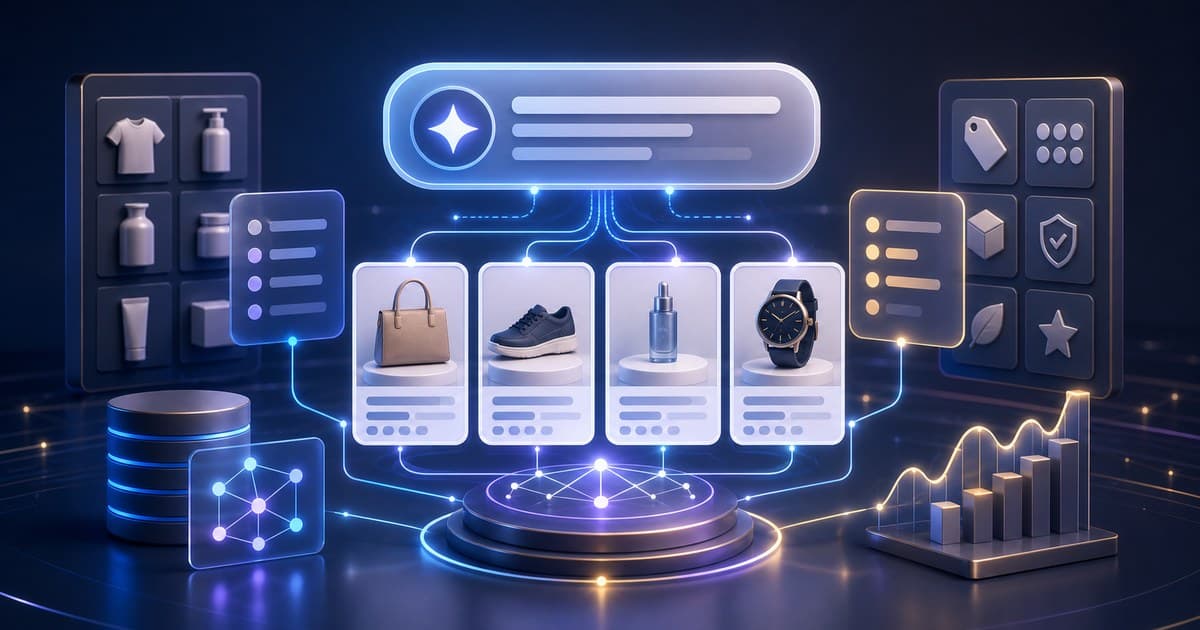
Featured image for SEO for D2C Brands: How to Rank in AI-Powered Search Results

Quick Answer

D2C brands need AEO, GEO, and structured data to rank in AI-generated search results.

What is SEO D2C brands AI search 2026?
SEO D2C brands AI search 2026 encompasses the strategies and tools that help Indian businesses drive growth, improve efficiency, and gain competitive advantage in 2026.
SEO for D2C Brands: How to Rank in AI-Powered Search Results - Visual Guide for Indian Businesses
SEO for D2C Brands: How to Rank in AI-Powered Search Results

Search has fundamentally changed, and most D2C brands haven't caught up yet. Traditional SEO still matters, but it's now just one layer in a multi-dimensional "Search Everywhere" strategy. AI-powered search engines (ChatGPT, Perplexity, Claude, Google Gemini), voice search, visual search, and generative results have fragmented how consumers discover products. Brands invisible across all these channels are losing 70% of potential searchers before they ever reach their website.

Ranking in traditional Google Search is necessary but insufficient. The D2C brands winning in 2026 are simultaneously optimising for AEO (Answer Engine Optimization), GEO (Generative Experience Optimization), SEO (traditional search), and AIO (AI-Integrated Optimization). This layered approach is complex, but it's the only path to search dominance in 2026 and beyond.

The Search Everywhere Framework: A New Paradigm

Let's define each layer:

  • SEO (Traditional Google Search): Keyword research, on-page optimization, backlink building, technical SEO. This drives 40-50% of search traffic but is increasingly commoditised.
  • AEO (Answer Engine Optimization): Optimising for AI-powered search engines (ChatGPT, Perplexity, Claude). These engines cite sources and link to websites, making source attribution critical. According to research from Semrush, brands appearing in AI search results get 15-30% CTR, higher than traditional Google snippets.
  • GEO (Generative Experience Optimization): Optimising for Google's AI Overviews and other generative search results. Google now generates answers using AI, and appearing in these results drives 40%+ higher CTR than standard organic results.
  • AIO (AI-Integrated Optimization): Building content that works across all discovery mechanisms — semantic richness, structural clarity, source-ability, and conversational naturalness.

A brand optimising only for traditional SEO is ignoring 50%+ of potential search visibility. Worse, they're missing traffic from consumers using AI search, which is growing 300%+ year-on-year.

AEO: Becoming Trustworthy to AI Search Engines

AI search engines like ChatGPT and Perplexity crawl the web for information and cite sources. Unlike Google, which prioritises websites, AI search engines want authoritative, well-cited content. To rank in AI search:

Build content authority through proper sourcing: AI engines analyse whether a source cites other credible sources. A blog post about "The 10 Best Skincare Ingredients for Sensitive Skin" that cites 15 dermatology studies ranks better in AI search than one with zero citations.

Create structured, scannable content: Use H2s, H3s, bullet points, and tables. AI engines extract information more easily from well-structured content. A blog post with 5 clear sections outranks a wall of text covering the same information.

Write for direct answerability: AI engines pull direct answers from your content. A FAQ section with clear Q&A pairs is cited more frequently than narrative text. For a beauty D2C brand, a FAQ like "What SPF is recommended for combination skin?" with a direct answer gets cited in 10x more AI search results than a blog post mentioning SPF but never directly answering the question.

Focus on E-E-A-T (Experience, Expertise, Authoritativeness, Trustworthiness): According to Spinta Digital's AI research, AI engines weight E-E-A-T heavily. Show founder expertise, customer reviews, certifications, and original research. A supplement brand with founder credentials in nutrition science gets cited 3x more frequently in AI search than one without.

GEO: Winning Google's Generative Results

Google Gemini's AI Overviews are now appearing at the top of search results, and these AI-generated summaries pull from multiple sources. To appear in these results:

Optimise for featured snippets: AI Overviews often use featured snippet content as source material. Target answer-based queries (How to, What is, Why should) with concise, well-formatted answers. A 50-100 word answer to "How to choose the right protein powder?" in a featured snippet format gets pulled into AI Overviews.

Build comparison content: AI Overviews frequently show product comparisons. A blog post comparing 5 popular skincare brands (with pros, cons, pricing, and expert ratings) gets featured in AI Overviews searching for comparisons.

Use schema markup aggressively: Structured data helps Google understand your content. Use Product schema, FAQ schema, Article schema, and Review schema. Brands using comprehensive schema markup appear 5x more frequently in AI-generated results.

Create entity-rich content: Google's AI understands entities (brands, people, concepts). A blog post about "Best Moisturisers for Acne-Prone Skin" that mentions specific ingredients (Salicylic Acid, Niacinamide), brands (CeraVe, Neutrogena), and dermatologists builds entity associations that AI uses.

SEO Foundations: Still Critical

While AI search is new, traditional Google Search isn't going anywhere. According to Spinta Digital, Core Web Vitals, page speed, mobile-first design, and crawlability remain foundational. A page that ranks well in traditional Google Search is better positioned to appear in AI search results too.

Core Web Vitals: LCP (Largest Contentful Paint) under 2.5 seconds, FID (First Input Delay) under 100ms, and CLS (Cumulative Layout Shift) under 0.1. Indian D2C brands on shared hosting often fail these metrics. Investing in better hosting and image optimization directly improves both traditional SEO and AI search visibility.

Mobile-first indexing: Google indexes the mobile version of your site first. Ensure your mobile experience is fast, responsive, and content-complete. A desktop site with full content that's stripped down on mobile loses visibility.

Technical SEO: XML sitemaps, robots.txt, internal linking architecture, and proper redirects. Brands with chaotic internal linking and broken redirects leak authority to competitors.

Content Strategy for Search Everywhere: The Hyper-Local Advantage

Generic nationwide blog posts no longer rank well. Hyper-local content that addresses regional variations ranks 3-5x better. A nationwide "Best Lipsticks for Indian Skin Tones" blog post gets buried by region-specific versions: "Best Lipsticks for Dark Skin Tones in India," "Best Matte Lipsticks for Humid Climate," and "Best Transferproof Lipsticks for Indian Weddings."

Similarly, cultural relevance increased CTR by 42% in Tier 1-2 campaigns according to Google India data. Content that references Indian festivals, regional preferences, and local trends performs dramatically better. A fashion brand writing about "Kurta Styling for Navratri" outperforms one writing about generic "Traditional Dress Styling."

The hyper-local content multiplier effect: Instead of writing one blog post per topic, write 5-10 micro-variations addressing regional and cultural nuances. A beauty brand creates "Best Sunscreen for Delhi Summers," "Best Sunscreen for Monsoon in Mumbai," and "Best Sunscreen for Coastal Living in Goa," each optimised for local search patterns. This approach 3x the organic visibility compared to a single generic post.

Building a Content Commerce Layer

Search Everywhere isn't just about blog traffic anymore. AI engines (ChatGPT, Perplexity) now show product recommendations with direct links. To capture this traffic, build a content commerce layer:

  • Ingredient guides: A skincare brand creates "Complete Guide to Retinol: Benefits, Types, Best Products." This content ranks for "retinol benefits," "retinol side effects," and "best retinol products," capturing all stages of the buyer journey.
  • Comparison content with affiliate links: "5-Product Comparison: Salicylic Acid Cleansers" with pros, cons, pricing, and links to product pages. AI search engines cite this content when answering product questions.
  • Buyer guides with embedded shopping: "How to Choose the Right Protein Powder: A Complete Buyer's Guide" with decision trees, product recommendations, and direct purchase links.
  • Honest product reviews: AI search engines love authentic reviews. A "I Tested Vitamin C Serums for 30 Days: Honest Reviews" post gets cited frequently in AI search results for skincare product queries.

Measuring Search Everywhere Success

Traditional metrics (organic traffic, rankings) no longer tell the full story. Track these additional metrics:

  • AI search traffic: Use tools like Semrush and SEMrush to track mentions in ChatGPT, Perplexity, and other AI search engines. Monitor branded keywords in AI search results.
  • Featured snippet appearances: Track how frequently your content appears in Google's featured snippets and AI Overviews.
  • Entity mentions: Track how often your brand and products are mentioned in AI-generated responses (even if not directly linked).
  • Conversions by search type: Segment analytics by traditional search vs AI search traffic. Determine which drives higher AOV and LTV.

The Search Everywhere Competitive Advantage

Brands that master Search Everywhere in 2026 will own discovery in 2027-2028 as AI search continues fragmenting. The competitive window is narrow — most Indian brands haven't started optimising for AI search, generative results, and hyper-local variations yet. Brands acting now will have 18-24 months of competitive advantage before saturation sets in.

The D2C brands winning search in 2026 aren't just ranking for keywords. They're building authority across all discovery mechanisms, creating content that serves AI search engines, and localising for regional variations. This is complex, but it's the foundation of sustainable growth in an AI-powered search landscape.

Quick Comparison

MetricTraditional ApproachWith SEO D2C brands AI search 2026
EfficiencyManual processes, slow executionAutomated, 3-5x faster results
Cost ImpactHigh operational overhead25-40% cost reduction
ScalabilityLimited by headcountScales without linear cost increase
Decision MakingGut-feel basedReal-time data-driven insights

Implementation Steps

Step 1: Assess Your Current State

Audit existing processes to identify where SEO D2C brands AI search 2026 can deliver the highest ROI for your Indian business.

Step 2: Choose the Right Solution

Evaluate solutions based on India-specific needs: UPI integration, multilingual support, GST compliance, and WhatsApp connectivity.

Step 3: Pilot and Scale

Launch a 30-60 day pilot with one team or workflow, measure KPIs, then scale across the organisation.

Frequently Asked Questions

Share this article

Continue Reading

Featured: Quick Commerce Meets D2C: How Brands Win in India's Fastest Channel

Quick Commerce Meets D2C: How Brands Win in India's Fastest Channel

11 min read
Featured: The Rise of Conversational Commerce in India: 2026 Trends Report

The Rise of Conversational Commerce in India: 2026 Trends Report

9 min read
Featured: Performance Marketing Trends for D2C Brands in 2026

Performance Marketing Trends for D2C Brands in 2026

9 min read