

OpenAI Deployment Company matters because it turns enterprise AI from model access into workflow redesign. OpenAI said the new business launches with more than $4 billion of initial investment and about 150 Forward Deployed Engineers and Deployment Specialists joining from Tomoro. Indian operators should read that as a signal that deployment discipline, not prompt novelty, is becoming the real moat.
OpenAI Deployment Company is the important part of OpenAI's May 11, 2026 announcement because it formalizes something revenue and operations teams already feel. Buying model access is easier than changing how work moves. OpenAI is packaging forward deployed engineering, workflow diagnostics, and operating change as one deployment motion. For Indian founders and operators, the practical lesson is simple. The next AI budget should be tied to the workflows that can be redesigned, governed, and measured, not to another isolated pilot.
What changed with OpenAI Deployment Company on May 11?
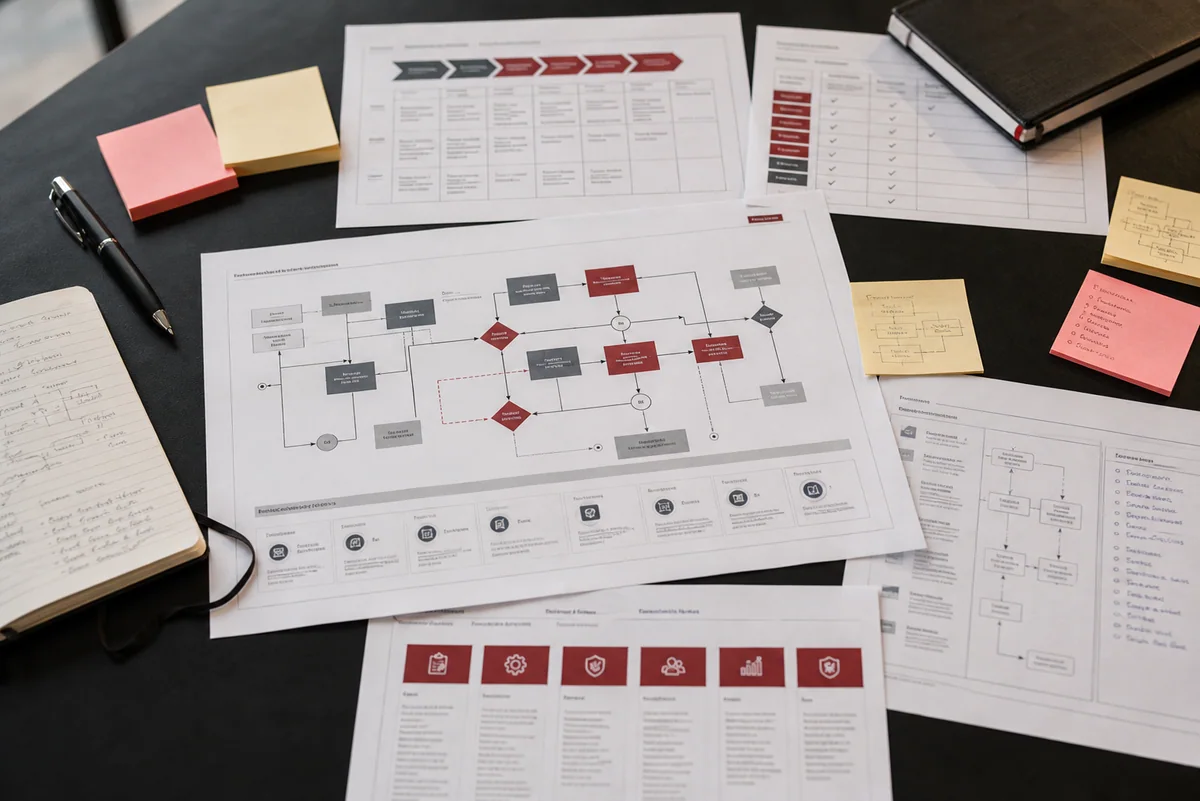
OpenAI said the new unit combines OpenAI's model platform with deployment services that help enterprises redesign workflows, ship production systems, and assign embedded implementation talent. The company also said the launch includes more than $4 billion of initial investment, around 150 Forward Deployed Engineers and Deployment Specialists from Tomoro, and a partner network that spans investors, consultancies, and systems integrators.
That matters because the commercial message is different from a normal product release. OpenAI is not asking operators to buy one more AI tool and figure the rest out later. It is saying enterprise AI now needs a deployment layer with ownership, process redesign, and change management. For teams that still treat AI as an experimentation line item, the announcement is a warning that weak workflow ownership will become the main reason value does not compound.
- OpenAI Deployment Company
- OpenAI Deployment Company is OpenAI's new enterprise deployment business for workflow redesign, embedded implementation talent, and production operating change. The important point is that it treats AI adoption as a system redesign problem, not just a model procurement decision.
The companion OpenAI enterprise article strengthens that interpretation. It argues that the next phase of enterprise AI depends on getting AI into recurring business workflows instead of leaving it as a disconnected assistant. That is the same tension Indian businesses face in CRM, support, marketing operations, catalog management, and internal reporting.
In our experience, the companies that extract value fastest are rarely the ones with the most AI experimentation. They are the ones that decide which workflow owner, exception path, and success metric matter before the first deployment sprint starts.
Why does OpenAI Deployment Company matter for Indian operators now?
Most Indian growth companies do not have a model access problem. They have an execution problem. Lead qualification still depends on manual triage, support escalations live across channels, catalogs are inconsistent, and reporting logic changes from one team to another. OpenAI Deployment Company matters because it validates a higher bar for AI buying. The winning teams will fund AI where workflow ownership is clear, business rules are explicit, and outcomes can be reviewed weekly.
It also shifts how vendors and agencies will be evaluated. If OpenAI is attaching forward deployed talent to revenue-critical workflows, buyers will expect every AI proposal to explain process mapping, governance, fallback rules, data handling, and adoption metrics. That is commercially healthy. It makes AI spending easier to defend because the conversation moves from demos to operating leverage.
| Question | Pilot AI mindset | DeployCo-style mindset | What leaders should ask |
|---|---|---|---|
| Budget owner | Innovation or experimentation line | Business owner with operational accountability | Who owns the workflow after launch? |
| Success metric | Usage or excitement | Cycle time, accuracy, conversion, or cost change | What weekly metric proves value? |
| Implementation | Prompt testing | Process redesign plus deployment support | Which handoffs must change? |
| Governance | Ad hoc review | Rules, fallback paths, and auditability | What fails safely when the model is wrong? |
What should teams copy from OpenAI Deployment Company first?

The useful lesson is not that every company needs an OpenAI-sized deployment unit. The useful lesson is that every AI program needs one owned workflow, one accountable business sponsor, and one measurable operating scorecard before expansion. Start with the workflow that already hurts. That could be lead routing, post-purchase support, quote turnaround, catalog enrichment, or internal reporting assembly.
- Pick one workflow where manual delay, inconsistency, or rework already costs revenue or management time.
- Write the exact inputs, approvals, exceptions, and fallback rules before adding automation.
- Assign one operator who owns adoption, measurement, and weekly issue review after deployment.
- Instrument the outcome with business metrics such as turnaround time, resolution quality, coverage, or conversion rate.
- Scale only after the first workflow survives real exceptions, not just ideal demos.
This is where OG Marka's service model stays relevant. Businesses that want AI agents in live operations usually also need cleaner CRM states, better process definitions, and tighter handoffs across marketing, support, and finance. If that base layer is weak, the model simply automates confusion faster. For teams planning the next build, compare the workflow with our AI agents service and the process side with digital transformation work.
How should leaders measure whether deployment is working?
Use business outcomes first and model behavior second. Response time, qualification coverage, exception rate, escalation volume, output accuracy, and manager review time are usually better than vanity counts such as number of prompts or user logins. A deployment effort works when frontline teams trust it enough to stop rebuilding the task manually.
Another useful test is decision quality. If the workflow still depends on side messages, undocumented spreadsheets, or shadow approvals, the AI layer is not truly deployed yet. OpenAI Deployment Company points to a stricter operating model where workflow ownership and change management sit beside the model itself. That is the discipline Indian operators should copy first.
